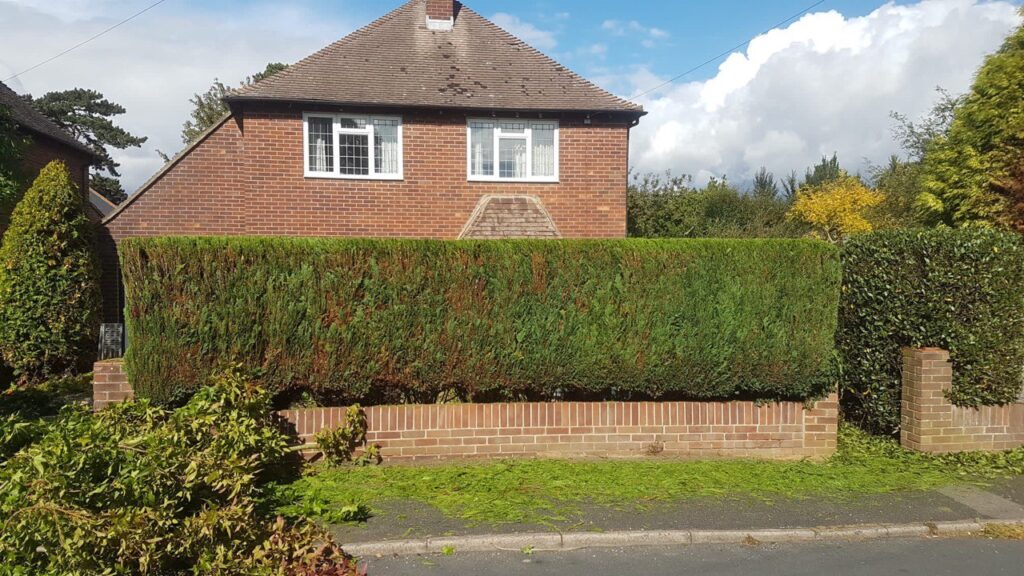
Crown Reduction to Protect Rooflines in Daventry
Trees positioned close to buildings can add character and natural appeal, but when growth becomes excessive, branches may begin to encroach on rooflines. Over time, this can lead to damaged tiles, blocked gutters and increased maintenance concerns. Crown reduction is a professional tree surgery technique designed to manage canopy size while preserving the health and structure of the tree. For homeowners in Daventry, Northamptonshire, crown reduction is often an effective way to protect rooflines without removing valuable trees.
At Daventry Tree Surgeons, crown reduction is carried out with careful planning to ensure both safety and long-term tree health.
How Overgrown Trees Affect Rooflines
When trees grow unchecked near properties, several issues can arise.
Direct Contact with Roof Tiles
Branches brushing against tiles during windy conditions can loosen or crack them over time.
Accumulation of Debris
Leaves and small twigs can collect in gutters and valleys, preventing proper water drainage.
Increased Moisture Retention
Overhanging canopies reduce sunlight and airflow, which can contribute to damp conditions on the roof surface.
Risk of Falling Branches
Large or weakened limbs pose a risk to roof structures during storms or high winds.
What Crown Reduction Involves
Crown reduction is not simply cutting back branches. It is a precise and controlled method of reducing the overall size of the tree’s canopy while maintaining its natural form.
Selective Branch Shortening
Branches are carefully shortened to suitable growth points, reducing height and spread without harming the tree’s structure.
Preserving Tree Balance
The reduction is evenly distributed to maintain stability and prevent uneven weight distribution.
Encouraging Healthy Regrowth
Professional cutting techniques support natural healing and controlled regrowth.
Benefits of Crown Reduction for Roof Protection
When performed correctly, crown reduction offers several practical advantages.
Creating Safe Clearance
Reducing the canopy ensures adequate distance between branches and the roofline.
Reducing Structural Strain
By lessening the weight and spread of the crown, stress on larger limbs is reduced, lowering the risk of breakage.
Improving Light and Airflow
Increased airflow around the roof helps keep surfaces drier and reduces the likelihood of moss build-up.
Retaining the Tree’s Presence
Crown reduction allows the tree to remain part of the landscape while addressing safety concerns.
Why Professional Expertise Matters
Improper tree cutting can cause long-term harm.
Avoiding Over-Pruning
Excessive cutting can weaken the tree and lead to unstable regrowth.
Protecting Tree Health
Correct pruning points minimise the risk of disease and decay.
Ensuring Structural Safety
Professional assessment identifies which branches require reduction to protect both the tree and the property.
Local Considerations in Daventry
Properties across Daventry often feature mature trees growing close to homes. Managing growth responsibly helps preserve both the character of gardens and the integrity of roof structures. Regular inspection and timely crown reduction are key to maintaining that balance.
Conclusion
Crown reduction is a highly effective way to protect rooflines from damage caused by overhanging branches. By carefully reducing canopy size, this technique improves clearance, enhances safety and supports long-term tree health. For homeowners in Daventry, Northamptonshire, crown reduction offers a practical solution that avoids unnecessary tree removal while safeguarding the property.
At Daventry Tree Surgeons, we provide professional crown reduction services tailored to local properties. If branches are encroaching on your roofline or you would like expert advice on managing tree growth, our experienced team is ready to offer reliable and knowledgeable support in Daventry.
Call us on: 01327 225 195
Click here to find out more about Daventry Tree Surgeons
Click here to complete our contact form and see how we can help with your tree needs.